
Inflation fell for the second consecutive week to 7.02 per cent for the week ended December 4, mainly due to cheaper primary and fuel products.

The rise in overall inflation for the second month in a row may prompt the central bank to go for another round of policy rate hikes in its policy review meeting, scheduled for May 3.

The annual rate of inflation based on monthly wholesale price index (WPI) was 1.22 per cent in December as compared to 1.55 per cent in the previous month. It was 2.76 per cent in December 2019. The decline last month was mainly due to lower increase in food prices, data released by the Ministry of Commerce and Industry showed on Thursday. The food inflation for December dropped to 0.92 per cent as compared to 4.27 per cent in the previous month.

The wholesale price index during the corresponding week a year ago was as high as 12.91 per cent, while in the previous week, it stood at (-) 1.58 per cent. During the week, prices of barley, jowar and gram rose by two per cent and condiments and spices, arhar and fruits and vegetables by one per cent each.

Overall inflation rose marginally to 8.31 per cent in February, 2011, from 8.23 per cent in the previous month.

During the week, prices of steel, condiments and spices, marine fish and fruits and vegetables escalated. Among the manufactured items, prices of aluminium, locomotives and railway wagons increased while the prices of iron and steel declined.
While the wholesale price index stood at 0.48 per cent in the previous week, the rate of price rise was 9.32 per cent during the corresponding week a year ago. During the week, the prices of eggs went up by 11 per cent, mutton 3 per cent, and fruit and vegetables and spices 2 per cent each.
Wholesale price-based inflation stood at 8.90 per cent in the corresponding week a year ago. During the week, the prices of the maize, arhar, spices and fruit went up while ragi and barley declined.

However, some analysts say RBI Governor Raghuram Rajan may delay the rate cuts amid mounting concerns over the government's fiscal health.
The widely-tracked wholesale price index (WPI), the cause of severe political pangs for the government every Friday, will be released on a monthly basis by the end of this year instead of weekly. In effect, instead of witnessing the release of inflation data for 52 consecutive weeks, the data will be made available only a dozen times a year.
Food inflation surged to a four-and-a-half month high of 9.90 per cent during the week ended July 30 on the back of costlier onions, fruits, vegetables and protein-based items.

The hardening of the Wholesale Price Index follows an uptick in retail inflation.

Food inflation inched up to 17.40 per cent for the week ended January 16 on account of high prices of potato and pulses. The wholesale price-based food inflation was 16.81 per cent in the previous week. Potato prices rose as much as 57.56 per cent over the last year, followed by prices of pulses which jumped by 46.87 per cent.
Inflation fell marginally to 3.01 per cent in the week ended August 27 from 3.08 per cent a week ago, despite rise in prices of food, aviation fuel and manufactured items.
With the average WPI-based inflation at 7.5% and CPI-based one above 10%, a bit of aggression is required to beat inflation. Four experts give their views.

Falling core inflation on the back of slowing economic growth is likely to create space for the Reserve Bank to ease monetary policy in the early part of the next year, rating agency Crisil said.
The price difference between branded tea and loose tea has narrowed to a mere 5 per cent, helping the consumer to opt for branded labels. According to Bloomberg, the wholesale price index for tea in India gained 74 basis points from 128.30 in January to 222.50 at end of October this year. As a consequence, tea manufacturers in the wholesale and loose tea business, besides branded tea players, have increased prices.
Inflation rose for the third consecutive week to 5.03 per cent for the week ended May 29 despite cheaper vegetables and fruits, eggs and several edible oils.
After remaining unchanged in the previous week, inflation fell to a 40-month low of 4.83 per cent during the week ended February 19 due to cheaper edible oils, vegetables and some of the manufactured products despite higher global oil prices.
Central bank should raise key policy rates again but avoid becoming a prisoner of its own making.

The bank is due to review the monetary policy on July 30.

CRISIL also expects the average Wholesale Price Index inflation to be higher at around 8 per cent as against of 7 per cent estimated earlier.
The UPA government's commitment to keep the price rise under check notwithstanding, inflation rose by 0.47 per cent to 4.67 per cent for the week ended May 15 due to surging prices of mass consumption items like vegetables, milk and edible oils.

The wholesale price-based inflation stands at 9.9 per cent in March, but many analysts criticise the compilation of data, saying it includes several items that are no longer in vogue.

Headline inflation, as measured by the wholesale price index, was 9.7 per cent in March, 8.7 per cent in April and 9.1 per cent in the following month.

Noting that India's inflation record was 'much, much better' against emerging economies, Basu said inflation should go down from September and as per expectations and calculations of the Finance Ministry, it will go below seven per cent from September.

The forecast has an error margin of four days, which is considered normal
The 30-share Sensitive Index or Sensex ended the weak in the negative region. It tanked 620 points to close at 13,802, a loss of 4.3% compared to Thursday's close.
RBI faces contradictory signals.

Data released on Thursday showed prices of essential commodities like cereals went up by 12.7 per cent, rice by 11.75 per cent, wheat 12.6 per cent and pulses rose by 42 per cent.
The Sensex opened with a positive gap of 63 points at 15,896, but soon slipped into red owing to nervousness in the markets. The Sensex finally ended with a significant loss of 489 points at 15,343. The NSE Nifty dropped 125 points to close at 4,647. BHEL and HDFC, L&T and M&M, ICICI Bank, Maruti and Reliance, HDFC Bank, DLF, Reliance Communications and Infosys, Cipla, Tata Motors and NTPC were major losers. Ambuja Cements, Reliance Energy, SBI and TCS too were losers.
An analysis by Business Standard suggests that for the week ended May 10, for which data will be released next Friday, the inflation rate will range between 7.67 per cent and 8.05 per cent, depending on how the index moves.

In its monetary and macroeconomic development report, RBI has raised hopes of a rate cut but also flagged some challenges.

With inflation turning positive after 13 weeks, the Reserve Bank on Thursday said the wholesale price index may rise to six per cent by this fiscal end a development that may pose challenges to the central bank in maintaining a stable monetary policy.
After remaining firm for two consecutive weeks, inflation fell marginally by 0.14 per cent to 4.26 per cent for the week ended April 24 even as prices rose for fruits, vegetables, eggs and various manufactured items, including edible oils.
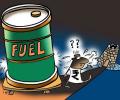
The wholesale price-based inflation accelerated to a record high of 12.94 per cent in May, on rising prices of crude oil and manufactured goods. Low base effect also contributed to the spike in WPI inflation in May 2021. In May 2020, WPI inflation was at (-) 3.37 per cent. This is the fifth straight month of uptick seen in the wholesale price index (WPI)-based inflation. In April, 2021, WPI inflation hit double digit at 10.49 per cent. "The annual rate of inflation, based on monthly WPI, was 12.94 per cent for the month of May, 2021 (over May, 2020) as compared to (-) 3.37 per cent in May 2020.
RBI may wait for a substantial downtrend and maintain repo at the current level in its third-quarter review.

The report said that weak global growth prospects have kept company prices in check in the international market and the same sentiments were being reflected in the domestic market. According to CMIE, prices of basic metal and metal products are projected to decline by 10.5 per cent in the current fiscal.

Some see CRR cut as tight liquidity continues.
A Reuters poll forecast the wholesale price index , India's main inflation measure, rose an annual 7.6 per cent in November, up from 7.45 per cent in October.
